this page intentionally left blank
this page intentionally left blank
Introduction
This is a zine about making and mending. I know how to make and mend clothes, while my friends know how to do lots and lots of other things, like fix electronics and grow vegetables.
I learned to sew when I was a teenager in the early 00’s. It felt punk to me. I was no longer restricted to wearing what was in the stores.
Meanwhile, for all the technical advancements across many industries, clothing production is not automated, and human hands still make clothes. Not all working conditions are exploitative; however, if a garment is already inexpensive, one has to question how much someone was paid to make it.
Making and altering has provided me a way to either opt out of fast fashion altogether, or honour the garment that someone else made by continuing to provide it a purpose.  And I'd love to share those stories and skills with you.
Andrew's Jacket
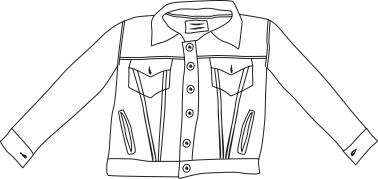
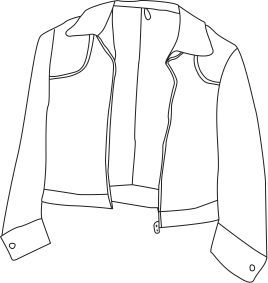
The jacket is a black denim Levi’s jacket. Andrew always wore it with the sleeves rolled up, which meant that holes had developed where the fabric was folded. It was an easy fix, but it did require a sewing machine and specialty denim needles (handsewing denim would be rough).
- I removed the cuffs using a seam ripper, picking out the topstitching on the cuff. I also made a note of which one was left and which one was right once I was done.
- I measured where the holes were. This was a good indicator of where Andrew needed the sleeves shortened to
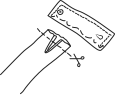 I trimmed away the excess fabric.
- I reattached the cuffs with topstitching, matching what was already there.
Looking after your clothes
Re-wearing your clothes is a great way to keep you looking good and to avoid the clothing-filled landfills.
Launder with love
Get your hands on a clothes horse and avoid the electric dryer. For all other laundry advice, the r/laundry subreddit is unmatched.
Tailor to fit
Make friends with your local tailor and get those alterations done. Clothes that fit properly don’t wear out as fast. This is also a good chance to pre-mend clothes, like adding denim patches to the inner thighs of jeans.
Mend early
If you notice a hole or a tear, get onto it straight away, as wear and tear tends to escalate once it starts.
Rinse and repeat
Learn to love re-wearing your favourite outfits. I must admit, this takes time, especially when newness is valued in fashion. It took me a while, but I now look forward to wearing a classic outfit because I know it’s going to make me feel good.
Altering Your Own Clothes
Altering your clothes can be so much more than just mending. To me, alterations not only allow you to breathe new life into old styles, but it’s also a chance to make your clothes tell your story.
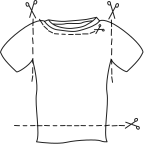 Cut it: Cut the sleeves off t-shirts, make cropped sweaters, or cut patterns into gym shorts.
- Change the buttons: Different buttons can make an inexpensive shirt look luxe, or a plain shirt more exciting.
- Add trim: Try to use garment-quality trim where you can; it will move with your clothes and look a lot more intentional.
- Dye it: Rit dye comes in dozens of colours, and their website has recipes to make many more.
- Experiment with embroidery:
 This can be as easy as adding patches, but if you’re feeling super crafty and have some patience, grab some embroidery floss and follow a youtube tutorial.
Travis' Trousers
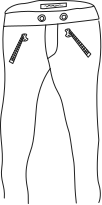 Travis has long been a supporter of the clothes that I make, and he’s always made an effort to introduce me to other creatives. He asked if I could replace the broken drawstring in his trousers, his John Varvatos trousers. Travis offered me money, but instead, I asked for an IOU. Travis is a very good gardener who grows his own vegetables, and I knew he’d have tomatoes at the height of summer. It was a deal.
 I originally bought new twill tape and tips to make a new drawstring, but then Travis mentioned that he found an old drawstring from something else that fit around his waist. Maybe we could use that? I threaded the new drawstring through. It looked perfect, and Travis was so excited, which was such a reward.
Gavin's Hoodie
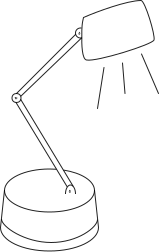 I'm not afraid to rewire a lamp; I've done it before. You can buy kits from the hardware store, and the only tool you need is a screwdriver. But this lamp, this lamp, the screws were some mysterious shape. Even after buying a set of unusual screwdrivers, I still couldn't get in.
Gavin heard me talking about getting things mended for folks and offered his help with electronics. He was pretty sure he had the right screwdriver (he did not, but he did order the correct one). His exact words were "fuck these screws." However, I'm pleased to report he got in.
At the time of print, I have not mended the hoodie yet, mainly because it hasn't been warm enough for Gavin to part with it.
Build Your Own Sewing Kit
To get started, you don’t need much at all.
- Needles: You can get a multi-pack that has different lengths and sharpness for almost every scenario.
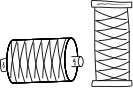
- Thread: Get colours that roughly match your clothes. Avoid the clear thread; it’s difficult to use and will just make you mad.
- Scissors: If you’re just working with thread, any scissors will do, but if you’re cutting fabric, fabric scissors will feel nicer.
- A ruler: While tape measures are useful, I have a 12” x 2” clear gridded ruler that I use all the time and can’t live without.
- Technically optional, but highly recommended, an iron and an ironing board:
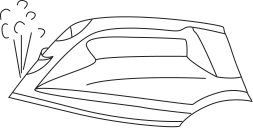 Every time you stitch something, it will benefit from being pressed (no, a steamer won’t cut it). Ironing your clothes is also a very fast and easy way to look really sharp.
Where to buy sewing supplies
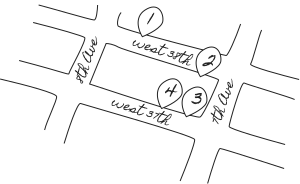
If you’re in New York, the Garment District is just south of Times Square in Manhattan. While not as bustling as it once was, it’s still a great resource and is primarily made up of independent businesses. My top shops include:
- SIL Thread (map). My favourite place for thread and tools, and they have a wide array of high-quality zippers.
- Pacific Trimming (map). This is a great one-stop for buttons, trim, Rit Dye, embroidery floss, basically any little thing you might need.
- Steinlauf and Stoller (map). I really love their button selection here; it’s much smaller than other stores, but they have a lot of vintage deadstock, so you may be able to find something quite special.
- Mood Fabrics (map). Mood is the closest thing to an all-in-one fabric and haberdashery, so if you were good at navigating Joann's, you’ll be able to handle Mood.
If you need to order online, Wawak is an industry favourite. They have great prices and if you order over $35, express shipping is the default.
A Very Small Map of My Favourite Places in the Garment District
Do I Need a Sewing Machine?
If you're just fixing hems and replacing buttons, you do not need a sewing machine. They're heavy, I won't lie to you.
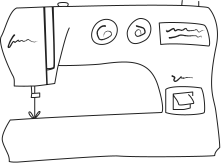
I do get asked quite often what kind of sewing machine I recommend. For someone learning to sew, I recommend a mechanical machine, so no computers. They're less expensive, and if they break, they're easier to fix. I've had my Janome 2212 for ten years now, and it does almost everything I need it to. Other brands with good reputations include Brother and Bernina, while a modern Singer is not worth it at all.
But before going out to purchase a new machine, I would definitely check in with family or friends to see if they have a sewing machine they'd be willing to loan or give you. A sewing machine will often unlock some stories.
This is my sewing machine
Kristina's Trousers
I did this alteration last year, but it's such a common thing people tell me about, so I wanted to share how I fixed it.
It's very common, so common, to find that the inner thigh of a pair of pants or jeans wears a hole. This is not the fault of anyone's body; this is the fault of the garment. The way the fabric is cut to shape the body means that part of your pants is prone to stretching, and when something is stretched, it will wear out faster. Combine that with the fact that the quality of fabrics used in commercial manufacturing is declining, and no wonder pants fail us sometimes.
The fix requires patching the hole. By the time there is a hole, the mend will technically be visible, but if someone is staring at your crotch, there is a different conversation you are likely having. For Kristina's black polycotton trousers, I used some scrap black fabric I had.
Kristina's Avocado Philosophy
"It's simple, it all depends on the quality of the avocado.
"If you have a good avocado, then it's easy to make good guac."
Kristina's Avocado Philosophy
Michelle's Trousers
 Okay, so I don't barter all the time. I had told Michelle I would teach her how to fix the hem of her trousers; they were the correct length, but the stitches had broken. However, they were black trousers, we'd had a glass of wine, and I said, look, this is going to take no time at all on the sewing machine, so let's do that.
(Actually, now that I think about it, I think she brought the wine. She definitely brought the good hummus.)
Neil's Jacket
I don't believe in bartering within a marriage; it's not about keeping score, it's about working together to form the best team out there.
Also, what Neil has provided for me in terms of this zine and the accompanying mending happy hour is all the love, support and cheerleading anyone could ever ask for.
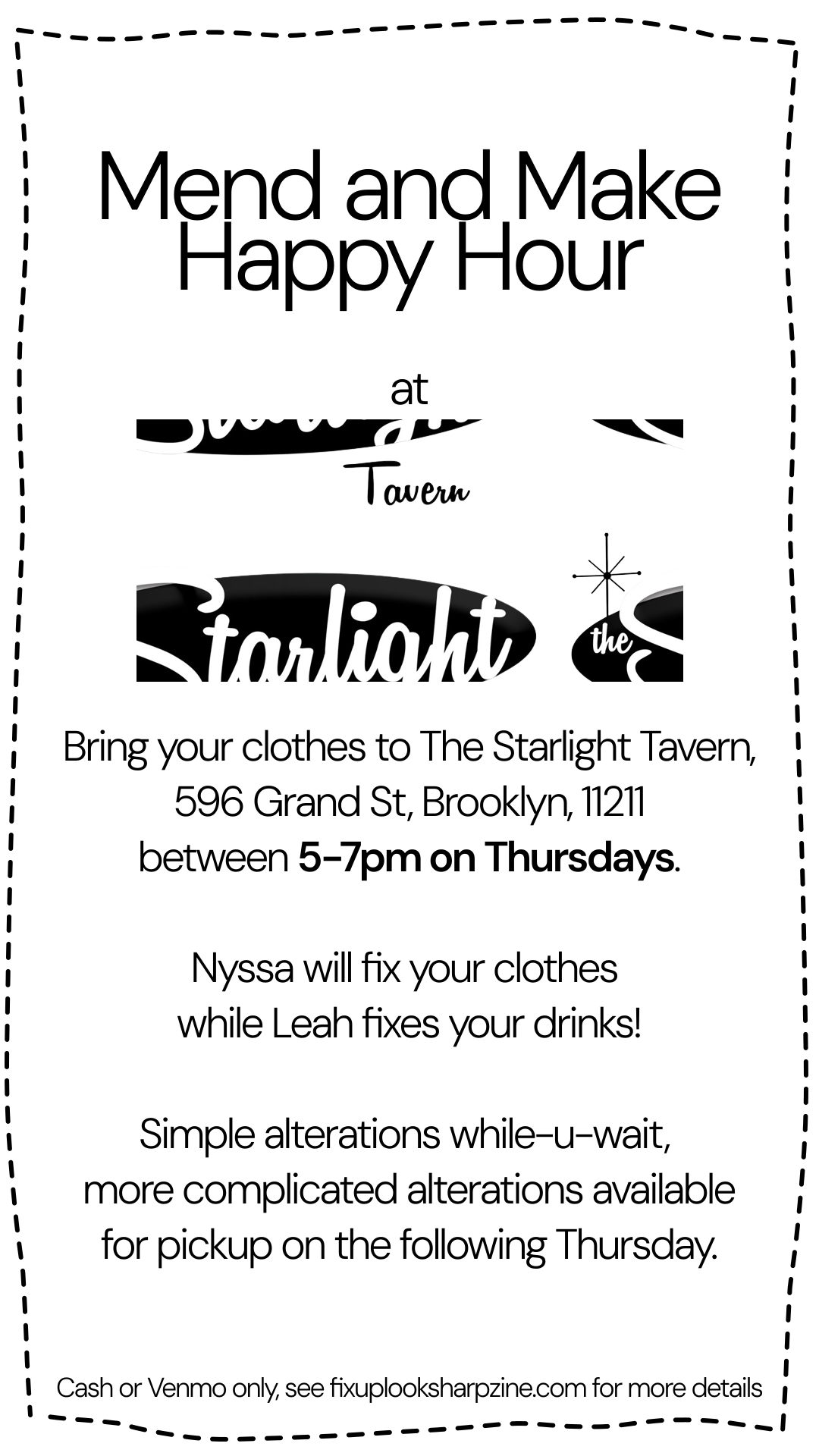
Come to the Mend and Make Happy Hour at The Starlight Tavern!